Tree Lopping and Removal in Yeading
If you are looking for Tree Lopping and Removal in Yeading, you are probably dealing with a tree that is getting too big, blocking light, leaning after bad weather, or causing concerns about safety near your home or business. In a place like Yeading, where residential streets, family homes, side access paths, shared boundaries, and commercial yards all sit close together, tree work needs to be carried out with care, planning, and the right equipment. A well-managed tree service can make a huge difference to how your property looks, feels, and functions.
Our local tree services are designed for everyday property owners, landlords, letting agents, business premises, and managing agents who need a practical solution rather than guesswork. Whether you need a crown reduced, branches cleared away from roofs and fences, or a full tree taken down because it has become unsafe or unmanageable, the aim is always the same: to carry out the work safely, neatly, and with as little disruption as possible.
From smaller front-garden trees to mature specimens close to outbuildings, garages, and neighbouring boundaries, every job starts with a proper assessment. That means looking at the tree’s condition, access, nearby structures, and what you want to achieve from the work. In Yeading, that local understanding matters because every property layout is different, parking can be tight, and access for equipment and waste removal is not always straightforward.
Why tree lopping and removal matters in Yeading
Tree work is not just about making a tree look tidier. It is often about reducing risk, improving light, protecting the structure of nearby property, and making your outdoor space usable again. In Yeading, many homes and commercial premises sit within close proximity of trees that were planted years ago and have now outgrown their original space. Over time, branches can spread into roofs, gutters, windows, telegraph poles, walkways, and neighbouring gardens.
Tree lopping and removal in Yeading can also be important after storms, heavy winds, or prolonged wet weather. Trees may split, become unstable, or show signs of decay that are not obvious at first glance. A leaning trunk, dead limbs, fungi at the base, or cracked branches can all suggest that intervention is needed sooner rather than later. Ignoring these signs can create avoidable problems for homeowners and businesses alike.
There are also practical benefits. A tree that is blocking daylight can make a room feel darker and colder. Overgrown trees can reduce visibility for drivers, impact CCTV coverage, or make it harder to maintain a clean and welcoming frontage for commercial properties. Careful pruning or removal can restore space, improve safety, and help you use the property more effectively.
Our local tree services at a glance
Not every tree needs to come down. In many cases, selective pruning or crown work can solve the issue while preserving the tree’s health and appearance. That is why a proper local service should offer more than just removal. The right approach depends on the species, the condition of the tree, and the surrounding environment.
Typical services requested by Yeading customers include:
- Tree removal for dangerous, dead, diseased, or unwanted trees
- Tree lopping to reduce height or spread where appropriate
- Crown reduction to bring a tree back under control
- Crown thinning for better light and wind movement
- Deadwood removal to reduce hazards from falling branches
- Sectional dismantling for trees in tight access areas
- Stump grinding where you want the base removed after felling
- Branch clearance away from roofs, fences, sheds, and driveways
Every site is different, so a careful inspection is essential before work begins. A tree that appears simple from the street may actually be growing over a shed, tangled with other vegetation, or rooted near services and paving. A sensible approach saves time, avoids damage, and gives a cleaner result.
When should a tree be lopped or removed?
Many customers are unsure whether a tree needs pruning or complete removal. A good rule of thumb is that if the tree is healthy and only overgrown, pruning may be enough. If it is unsafe, severely diseased, structurally compromised, or causing repeated damage, tree removal in Yeading may be the more practical option.
Common reasons people request help include:
- The tree has become too large for the space available.
- Branches are damaging gutters, roof tiles, or fencing.
- Roots are lifting paving, patios, or driveway surfaces.
- Deadwood or rot is creating a safety concern.
- The tree is blocking sunlight to a garden, kitchen, or office space.
- Storm damage has left the tree unstable or partially split.
- Neighbour disputes or boundary issues need a tidy, professional resolution.
It is worth remembering that some trees can be retained with careful management. For example, a crown reduction or selective thinning may reduce pressure on branches without removing the tree entirely. In contrast, a tree that is hollow, leaning heavily, or failing at the base may be beyond practical pruning. A local tree specialist should explain the options clearly so you can make an informed decision.
What to expect from a professional tree job
A proper tree service should feel organised from the first visit to the final tidy-up. That means clear communication, sensible planning, and a methodical approach on the day of work. For customers in Yeading, where access can be limited by parked cars, narrow side passages, shared entries, and busy roads, planning matters just as much as cutting skills.
The process usually begins with a site assessment. The team will look at the tree’s size, condition, lean, access routes, surrounding structures, and what needs to be protected. In some cases, the tree can be worked on from the ground or with standard climbing methods. In others, sectional dismantling is the safer choice, especially when the tree is close to a conservatory, garage, or neighbouring boundary.
During the work, branches are typically removed in a controlled sequence and lowered carefully to avoid damage. If a full removal is required, the trunk may be taken down in sections before the stump is dealt with separately. Waste is then cleared away, leaving the site ready for its next use. Good tree care is not just about cutting; it is also about leaving the area neat and manageable once the job is complete.
Tree lopping versus pruning: what is the difference?
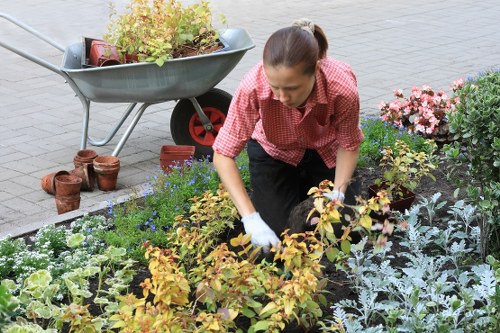
The term tree lopping is widely used by customers, but in practical terms the job may involve a range of different methods. In many cases, what people call lopping is actually a mix of pruning, shaping, crown reduction, or branch removal. The best method depends on what the tree needs and what outcome you want.
Pruning usually refers to the careful removal of selected branches to improve shape, health, airflow, or safety. Crown reduction is used to reduce the overall height or spread of the tree while retaining its natural form as much as possible. Thinning removes specific branches to allow more light through and to reduce wind resistance. True lopping, in the old-fashioned sense, is rarely the ideal choice for every tree and can be harmful if done badly.
That is why an experienced local team will not just cut for the sake of it. Instead, they will recommend a solution that matches the tree, the setting, and your goals. If you are unsure whether the work should involve pruning or full removal, a site visit can quickly clarify the most sensible route.
Residential tree work in Yeading
Yeading has a wide mix of property types, from family houses with gardens and driveways to maisonettes, terraces, and homes with shared side access. That variety means tree work needs to be adapted to the space available. A tree leaning over a front path may need careful section-by-section work, while a back-garden tree with limited access may require a more compact setup and a tidy waste plan.
For homeowners, tree lopping and removal often becomes necessary when a tree begins to affect daily life. Perhaps it is dropping heavy shade onto the garden, interrupting lawn growth, shedding debris into gutters, or spreading roots close to paving. In some cases, a tree can also make a garden feel enclosed and harder to enjoy. A professional service can restore balance without turning the job into a disruptive building project.
Many customers also want reassurance that the property will be treated with respect. That includes protecting lawns, paths, fences, sheds, and nearby planting. It also means working neatly in close quarters and ensuring debris is removed efficiently. When a tree is taken down in a residential setting, the final result should feel like a genuine improvement rather than a messy intervention.
Commercial tree removal and maintenance
Businesses in and around Yeading may need tree work for very different reasons. A tree outside a shop, office, warehouse, car park, or managed site can affect access, visibility, loading, and general presentation. Overgrown branches may interfere with security lighting or cameras, and fallen leaves can create slip risks on paths and entrances.
Commercial customers often need work carried out with minimum disruption and practical timing in mind. That may mean planning around opening hours, parking restrictions, delivery schedules, or tenant access. A local crew that understands the area can be more efficient because it is familiar with local traffic patterns, property layouts, and the kind of space constraints that often occur around busy roadside premises.
For managed properties, it is also important to keep outdoor spaces consistent and safe. Regular pruning or the removal of problem trees can reduce complaints, help maintain clear sightlines, and prevent avoidable maintenance costs later. Whether the work is a one-off removal or part of an ongoing maintenance schedule, the aim is always to keep the site safe and presentable.
Why choose a local tree company in Yeading?
Using a local team can make the process smoother from start to finish. A company that works regularly in Yeading and nearby parts of West London is more likely to understand the layout of the area, the types of properties involved, and the practical issues that affect access. That can be especially useful where parking is limited or where equipment needs to be manoeuvred through narrow entrances or shared drives.
There is also value in dealing with people who understand local expectations. Residents often want a neat, considerate service that keeps disruption low and finishes the job properly. Commercial clients may need reliable scheduling, a tidy site, and a clear plan for waste removal. A local service can respond with flexibility and practical experience rather than a one-size-fits-all approach.
Choosing a local company for tree lopping and removal in Yeading also means you are more likely to get advice that is grounded in the realities of the area. Trees in built-up streets can behave differently from trees in open spaces. They may be shaped by nearby buildings, shaded by other property, or constrained by paving and roots. Local experience helps when deciding whether to prune, reduce, or remove.
How the work is planned
Before any tree is cut, a sensible plan should be in place. This is one of the biggest differences between professional work and rushed or careless cutting. The plan may include where to park vehicles, how to access the garden or site, which branches will be removed first, and where the waste will be stacked before disposal. It may also involve checking for hazards such as overhead lines, fragile structures, or unstable ground.
In some cases, the work can be done quickly and with minimal equipment. In others, especially where the tree is large or close to property, the job needs careful sectioning and controlled lowering. If the stump is also to be dealt with, that should be planned separately so the site ends up usable rather than left with a problem base in the middle of the space.
Good planning is not a bonus; it is part of safe, responsible tree work. It helps protect your property, the workers, and anyone nearby while making sure the results are clean and practical.
Preparation checklist for customers
If you are arranging tree lopping or removal, a little preparation can help the job run more smoothly. You do not need to do anything complicated, but a few simple steps make a difference.
- Move vehicles away from the work area if possible.
- Clear access routes through gates, side paths, or driveways.
- Remove fragile garden items, furniture, ornaments, or pots from the immediate area.
- Inform neighbours if branches overhang a boundary or shared access point.
- Keep children and pets away from the work zone during the visit.
- Point out any particular concerns, such as paving, cable runs, sheds, or utilities.
- Decide in advance whether you want stump grinding or waste removal included.
If access is especially tight, it can help to mention that early. This allows the team to prepare suitable equipment and decide how best to bring materials in and out of the property. In Yeading, where some plots are compact and parking can be challenging, this step can save time on the day.
What affects the cost of tree removal?
Tree work pricing varies because every job is different. There is no honest way to quote properly without considering the size and condition of the tree, the access available, and the level of complexity involved. A small tree in an open garden is very different from a large mature tree growing close to a house or over a public-facing area.
Common factors that influence cost include:
- The height, spread, and species of the tree
- Whether the tree is healthy, dead, or damaged
- Access for ladders, climbing equipment, or machinery
- Proximity to buildings, fences, roads, and neighbouring land
- Whether the work involves pruning, full removal, or stump grinding
- The amount of waste that needs to be cleared
- Whether traffic management, extra labour, or specialist methods are needed
A straightforward quote should explain what is included and what is not, so you can compare options confidently. If you are weighing up whether to prune or remove a tree, asking for both possibilities to be considered can be helpful.
Safety, responsibility, and local awareness
Tree work should always be treated seriously. Even a small tree can present hazards if branches are rotten, the trunk is unstable, or the work area is awkward. Larger trees may require careful climbing, controlled cutting, and organised lowering techniques. This is why responsible tree care focuses on safe methods, not just speed.
In a busy place like Yeading, safety also extends beyond the immediate worksite. Neighbours, pedestrians, parked vehicles, and nearby properties all need to be considered. A careful team will manage the area sensibly and keep disruption to a minimum while the job is underway. That is especially important for roadside trees or properties with limited space between front boundary and street.
Responsible tree removal and tree lopping should leave you with peace of mind as well as a better-looking property. It should feel controlled, sensible, and finished to a standard that suits both homes and businesses.
Areas covered around Yeading
Tree services in Yeading often extend into nearby parts of west and northwest London, particularly where homes and businesses share similar access issues and property layouts. Local customers may also come from surrounding neighbourhoods with similar needs for pruning, removal, stump work, and site clearance.
Areas commonly covered can include nearby residential streets, estates, and commercial locations around places such as:
- Northolt
- Greenford
- Hayes
- Southall
- Hillingdon
- Uxbridge
- Perivale
- And other nearby West London locations
If you are not sure whether your property falls within the service area, it is usually worth asking when you enquire. Local teams are often flexible across neighbouring districts, especially for jobs that are straightforward to access and schedule.
Frequently asked questions
Do I need permission to remove a tree?
Sometimes, yes. It depends on whether the tree is protected by a Tree Preservation Order or whether the property sits in a conservation area. If there is any doubt, the tree should be checked before work begins. A reputable service will advise you to confirm the status rather than moving ahead blindly.
Can a tree be saved instead of removed?
Often, yes. Many trees can be managed with pruning, crown reduction, or deadwood removal. If the tree is healthy and the issue is mainly size or light, retention may be possible. Removal is usually considered when the tree is unsafe, severely damaged, or causing ongoing problems that pruning will not solve.
What happens to the waste after the tree is cut down?
Most jobs involve clearing away branches, trunk sections, and smaller debris. Depending on the agreement, waste may be removed from the site, and stump grinding may be offered separately if you want the base dealt with as well.
How long does a tree removal take?
That depends on the tree’s size, location, and complexity. A small tree may take only a short visit, while a large tree in a tight space can take much longer. Access, weather, and whether the stump is being removed also affect the timescale.
Will tree work damage my garden?
A careful team should take steps to limit disturbance. That includes planning access, lowering material safely, and moving waste in a controlled way. Some minor ground impact can be unavoidable in soft or restricted areas, but the aim is always to leave the site as tidy as possible.
Can you help with emergency storm-damaged trees?
Yes, urgent work is often required after high winds or heavy rain, especially if a tree is leaning dangerously or blocking access. In those situations, it is best to have the issue assessed quickly so any immediate hazard can be dealt with properly.
Choosing the right approach for your property
Every customer has a different reason for asking about tree lopping and removal. Some want more natural light in the garden. Others need a tree dealt with because it is unsafe. Some simply want to tidy a boundary that has become overgrown. The right approach depends on the tree itself and on what you want the finished space to look and feel like.
That is why a local, practical service is so valuable. Instead of assuming every tree needs the same treatment, the work should be tailored to the site. In some cases, selective pruning gives the best result. In others, full removal is the safer and more cost-effective solution. The goal is to achieve a result that is sensible, tidy, and suited to the property.
If you are dealing with a tree that has become a nuisance, a hazard, or simply too large for its location, now is the right time to take action. Contact us today to discuss the work you need, request a free quote, or arrange a convenient visit. Whether it is a one-off removal, a reduction to regain control, or a safer way to clear a problem tree, book your service now and take the first step toward a cleaner, safer outdoor space in Yeading.
Local tree work done with care
Tree lopping and removal in Yeading should always be approached with the property, the people using it, and the long-term condition of the landscape in mind. That means making sensible choices, using the right methods, and keeping the site orderly from start to finish. If you are ready to explore your options, a local assessment is the best place to begin.
Need help deciding?
If you are unsure whether pruning, reduction, stump grinding, or complete removal is the right choice, a visit from a local specialist can clarify the safest and most practical solution.

